
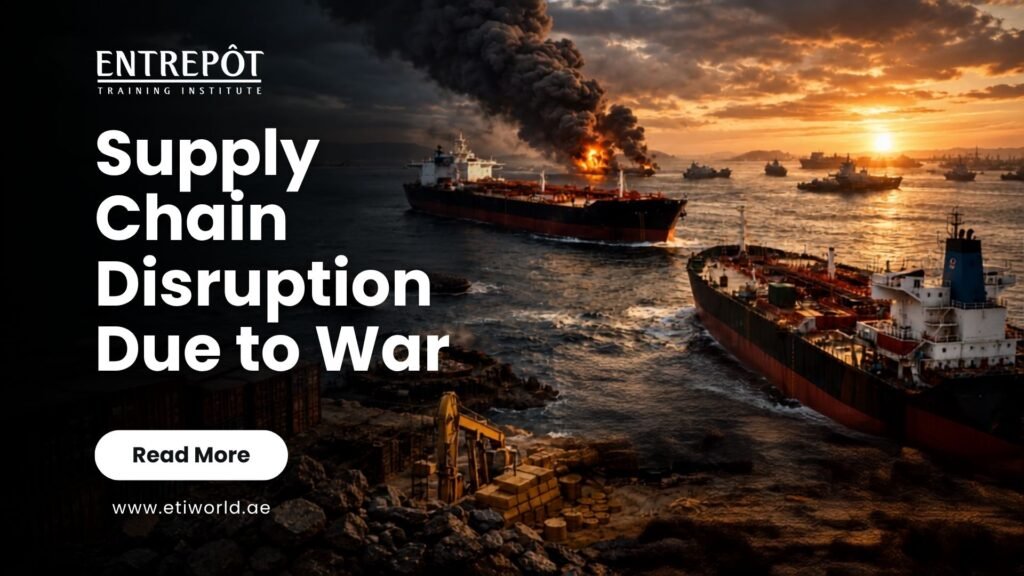
In an increasingly connected global economy, even a regional conflict can send shockwaves through international trade and transportation networks. The rising tensions and military confrontation between Iran and the United States have once again demonstrated how vulnerable global supply chains are to geopolitical instability. For logistics companies, manufacturers, retailers, and importers, the consequences can be immediate and far-reaching.
From rising freight costs to delayed deliveries, the biggest challenge faced by businesses during wartime is supply disruption. When critical trade routes become unsafe or restricted, companies must quickly adapt to changing conditions while maintaining service reliability and customer satisfaction.
Why Modern Supply Chains Are Vulnerable During War
Today’s supply chains depend on seamless coordination between suppliers, carriers, ports, warehouses, and customers across multiple countries. A conflict involving major geopolitical powers can trigger widespread supply disruption, affecting every stage of the logistics process.
The Iran–America conflict has drawn global attention because of its potential impact on key transportation corridors, energy markets, and international trade routes. Any escalation can create significant supply disruption for businesses that rely on efficient movement of goods across borders.
Unlike localized business challenges, wartime supply disruption can spread rapidly across continents, impacting industries that may seem unrelated to the conflict itself.
Strategic Trade Routes Under Pressure
One of the primary concerns during the Iran–America conflict is the security of major maritime routes in the Middle East. These waterways play a crucial role in global commerce and energy transportation.
When military tensions increase, shipping companies face the risk of supply disruption due to route restrictions, security threats, and operational uncertainty. A single incident can trigger supply disruption across multiple industries, causing delays that extend far beyond the conflict zone.
As vessels are rerouted to avoid high-risk areas, businesses experience additional supply disruption through longer transit times and higher transportation costs.
The Direct Impact on Logistics Companies
For logistics service providers, war creates a complex operating environment. Every stage of transportation becomes more challenging when supply disruption affects infrastructure, customs procedures, and carrier availability.
Freight operators must constantly adjust their plans to minimize supply disruption while maintaining delivery commitments. However, frequent supply disruption often increases operational expenses and reduces overall efficiency.
Many logistics businesses invest heavily in contingency planning because recurring supply disruption can significantly affect profitability and customer trust.
Fuel Prices and Transportation Costs
Energy markets are often among the first sectors affected by geopolitical conflict. Since Iran is located in a strategically important oil-producing region, any escalation involving the United States can influence global fuel prices.
Rising fuel costs contribute directly to supply disruption by increasing freight rates across road, sea, and air transportation networks. As transportation becomes more expensive, businesses must absorb additional costs or pass them on to customers.
Extended periods of supply disruption can make budgeting and forecasting significantly more difficult for logistics companies and supply chain managers.
Port Congestion and Shipping Delays
War-related uncertainty often leads to operational bottlenecks at ports and terminals. Increased inspections, security checks, and route adjustments can cause severe supply disruption throughout the shipping industry.
Port operators facing unexpected cargo surges may struggle to manage capacity, creating further supply disruption for importers and exporters. Even businesses located thousands of miles away can feel the effects of supply disruption caused by congestion at strategic trade hubs.
The longer the conflict continues, the greater the likelihood of ongoing supply disruption affecting global shipping schedules.
Challenges for Manufacturers and Retailers
Manufacturers rely on timely access to raw materials and components. When war creates supply disruption, production schedules become vulnerable to delays and interruptions.
A major supply disruption can prevent factories from receiving critical supplies, forcing businesses to slow production or seek alternative sources. In some cases, repeated supply disruption may result in inventory shortages that affect customer demand.
Retailers also face difficulties when supply disruption delays product availability, especially during peak sales periods. As a result, businesses must develop strategies to reduce exposure to future supply disruption.
Air Cargo and Emergency Freight Operations
Air freight is often used to overcome transportation challenges during crises. However, military conflict can restrict airspace access and create new forms of supply disruption.
Airlines may cancel routes or avoid specific regions, causing capacity shortages and increased shipping costs. These conditions generate additional supply disruption for industries that depend on fast and reliable transportation.
High-value goods, medical supplies, and technology products are particularly vulnerable to supply disruption when air cargo networks face operational restrictions.
The Importance of Supply Chain Visibility
Modern logistics technology plays a critical role in managing supply disruption during periods of geopolitical uncertainty. Real-time shipment tracking allows businesses to identify risks before they escalate into major operational problems.
Advanced analytics can help predict potential supply disruption and recommend alternative transportation options. By improving visibility, organizations can respond more effectively to supply disruption and maintain continuity even in challenging circumstances.
Technology alone cannot eliminate supply disruption, but it can significantly reduce its impact on business operations.
Building Resilience Against Future Disruptions
The Iran–America conflict highlights the importance of resilient supply chain design. Companies that rely on a single supplier, transportation route, or geographic region face greater exposure to supply disruption.
Diversification helps reduce the risk of supply disruption by creating multiple sourcing and transportation options. Businesses with strong contingency plans are better equipped to handle supply disruption without compromising customer service.
Investment in risk management, supplier partnerships, and digital logistics solutions can strengthen resilience against future supply disruption events.
Lessons for the Logistics Industry
The logistics sector has learned that geopolitical events can create sudden and unpredictable supply disruption across global markets. Organizations must remain flexible and prepared to respond quickly when conditions change.
Successful logistics companies view supply disruption not only as a challenge but also as an opportunity to improve planning and operational agility. Businesses that can adapt rapidly to supply disruption are more likely to maintain competitive advantages during periods of uncertainty.
Understanding the causes and consequences of supply disruption is essential for developing effective long-term strategies.
Conclusion
The Iran–America conflict demonstrates how modern warfare extends far beyond the battlefield. Through its impact on trade routes, energy markets, transportation networks, and business operations, the conflict has the potential to trigger widespread supply disruption across the global economy.
For logistics companies, the ability to manage supply disruption has become a critical business capability. Organizations that invest in resilience, technology, and proactive risk management will be better positioned to navigate future challenges. As geopolitical uncertainty continues to shape global trade, minimizing supply disruption will remain a top priority for logistics and supply chain professionals worldwide.